


3-Bore Glass Capillary Tubes
Precision Three-Hole Glass Capillaries for Specialty Fiber Alignment
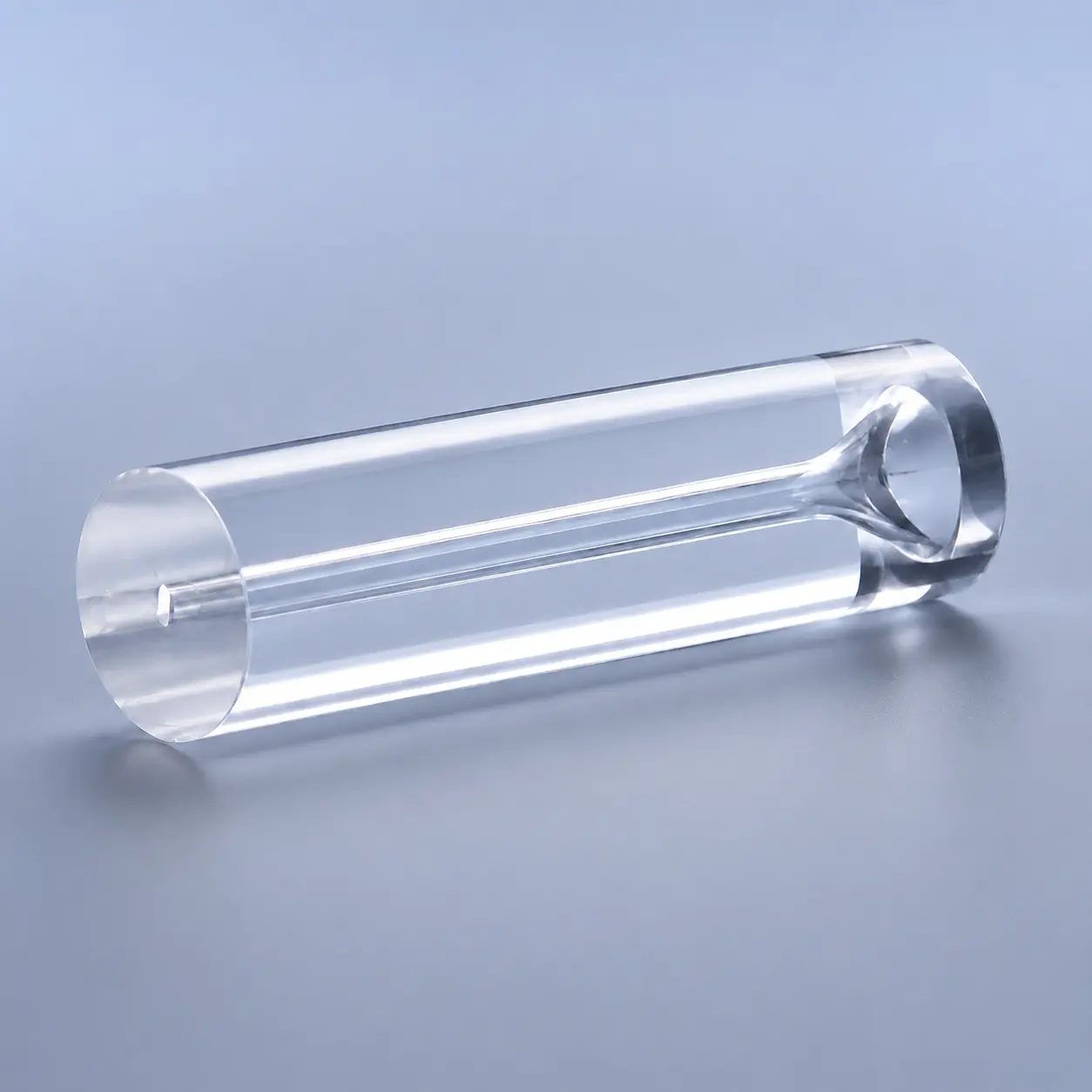
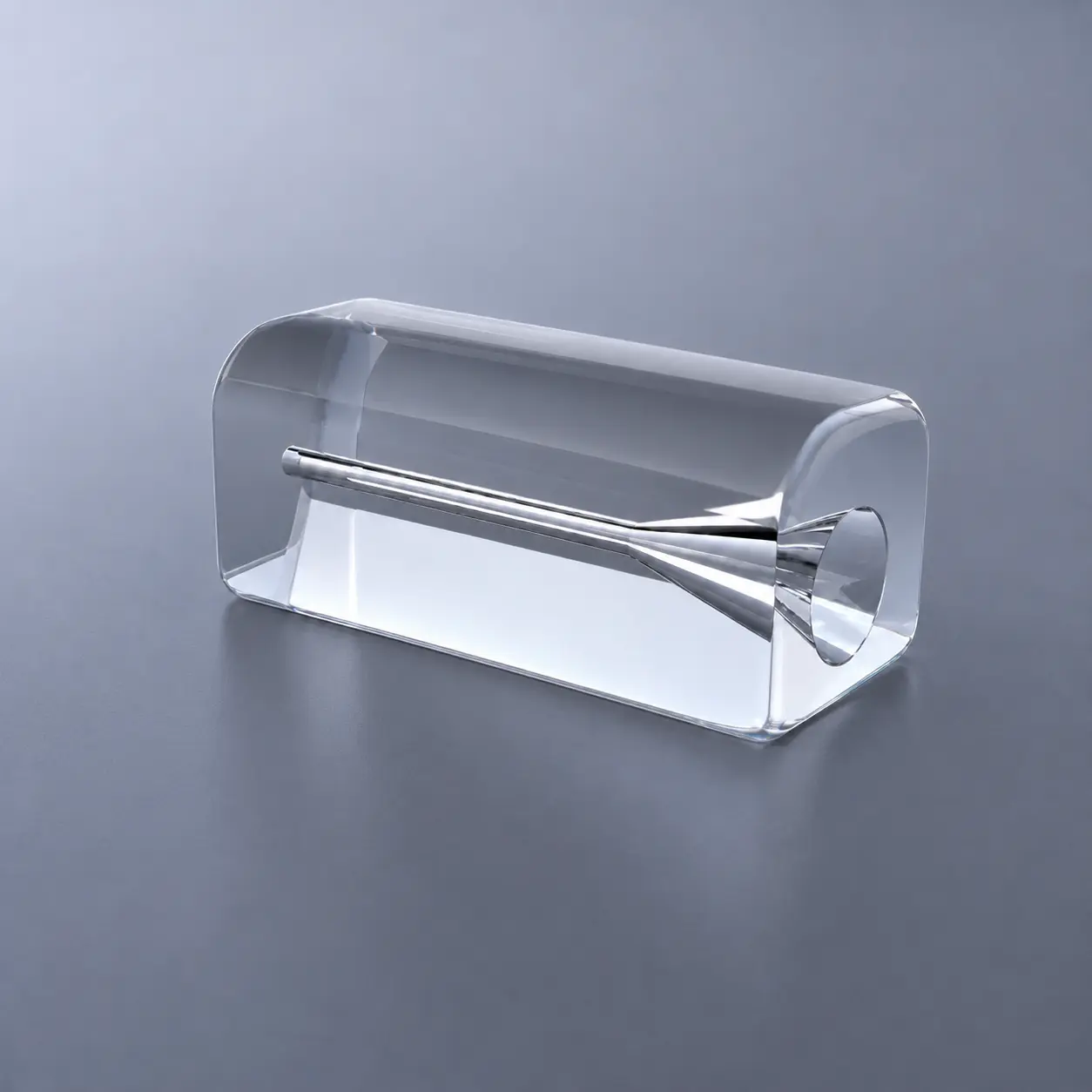
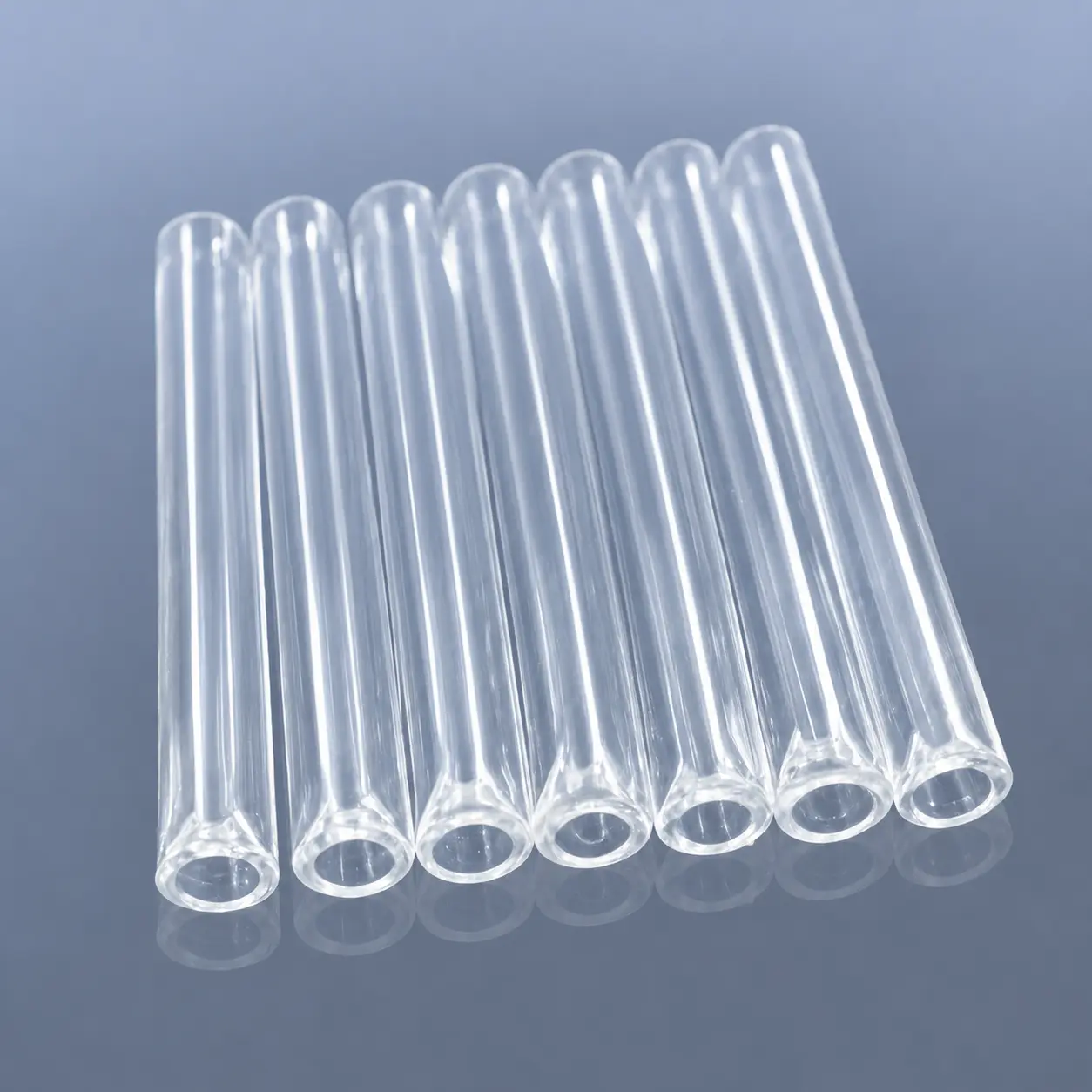
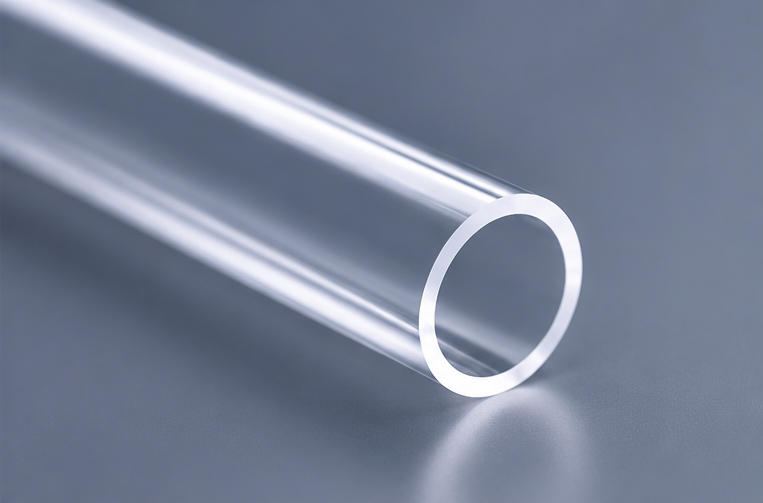
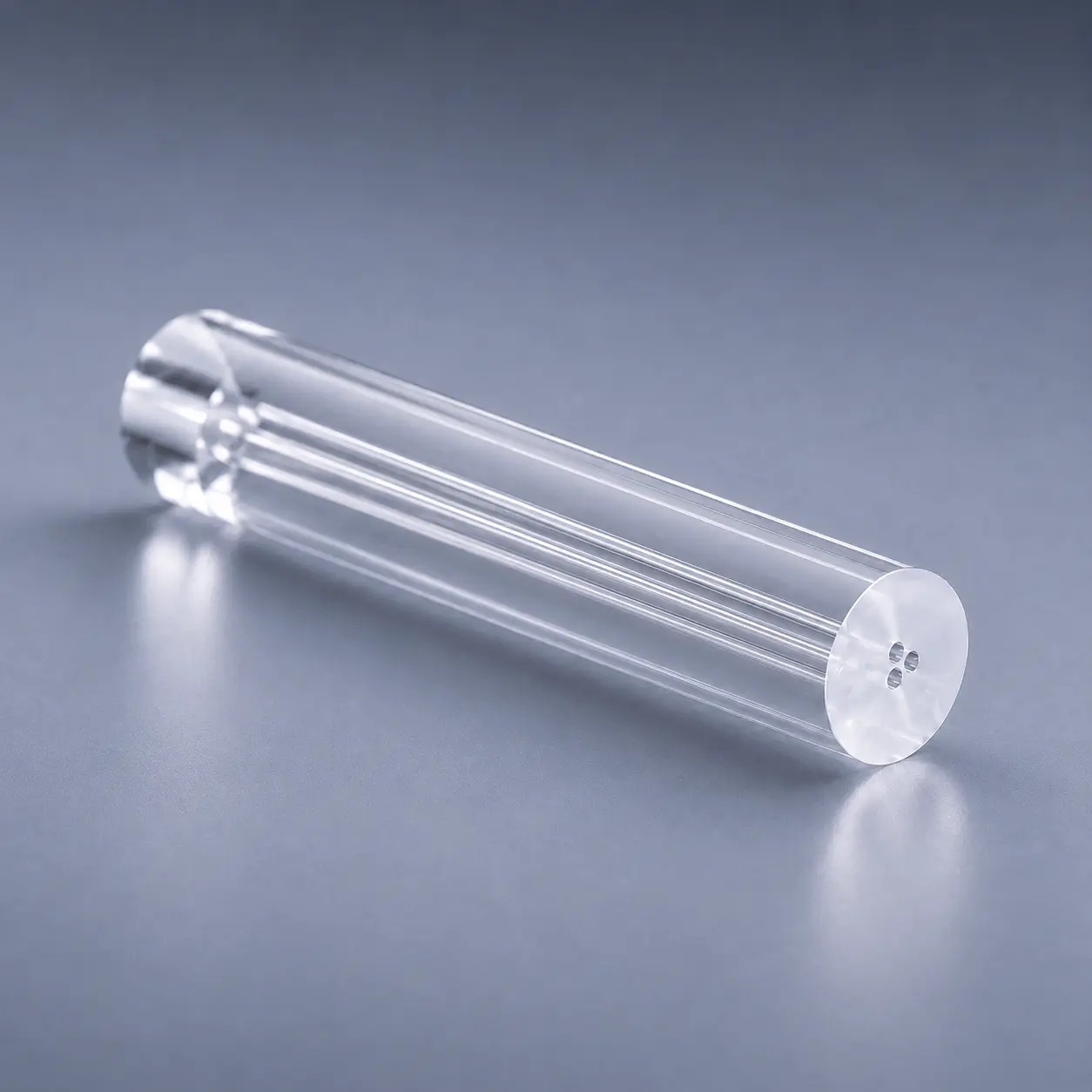
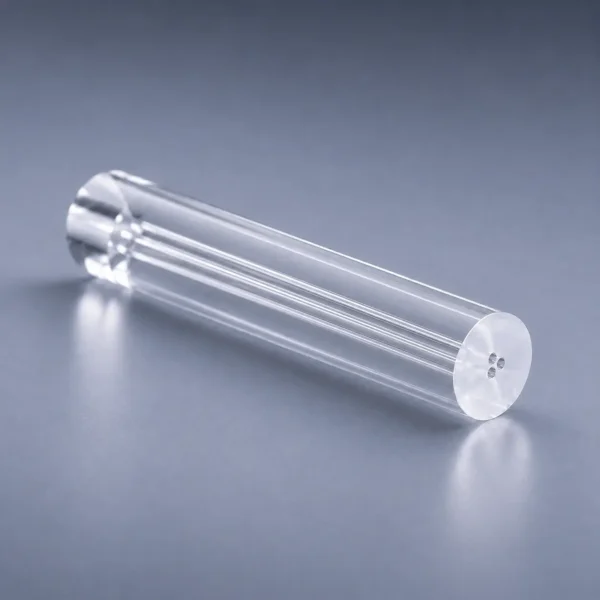
BYNET 3-bore glass capillary tubes feature three separate axial bores within a compact circular glass body. Designed for positioning and supporting multiple optical fibers, these capillaries can be used in specialty fiber assemblies, precision fiber alignment, and micro-optical component packaging.
The three-bore structure provides a defined geometric arrangement for individual fibers, with bore diameter, center-to-center pitch, and bore positioning selected according to application requirements.
Product Overview
Three-bore glass capillaries provide individual channels for positioning three optical fibers within a single glass component.
The arrangement of the bores defines the relative fiber positions and can support assembly processes where controlled spacing is required.
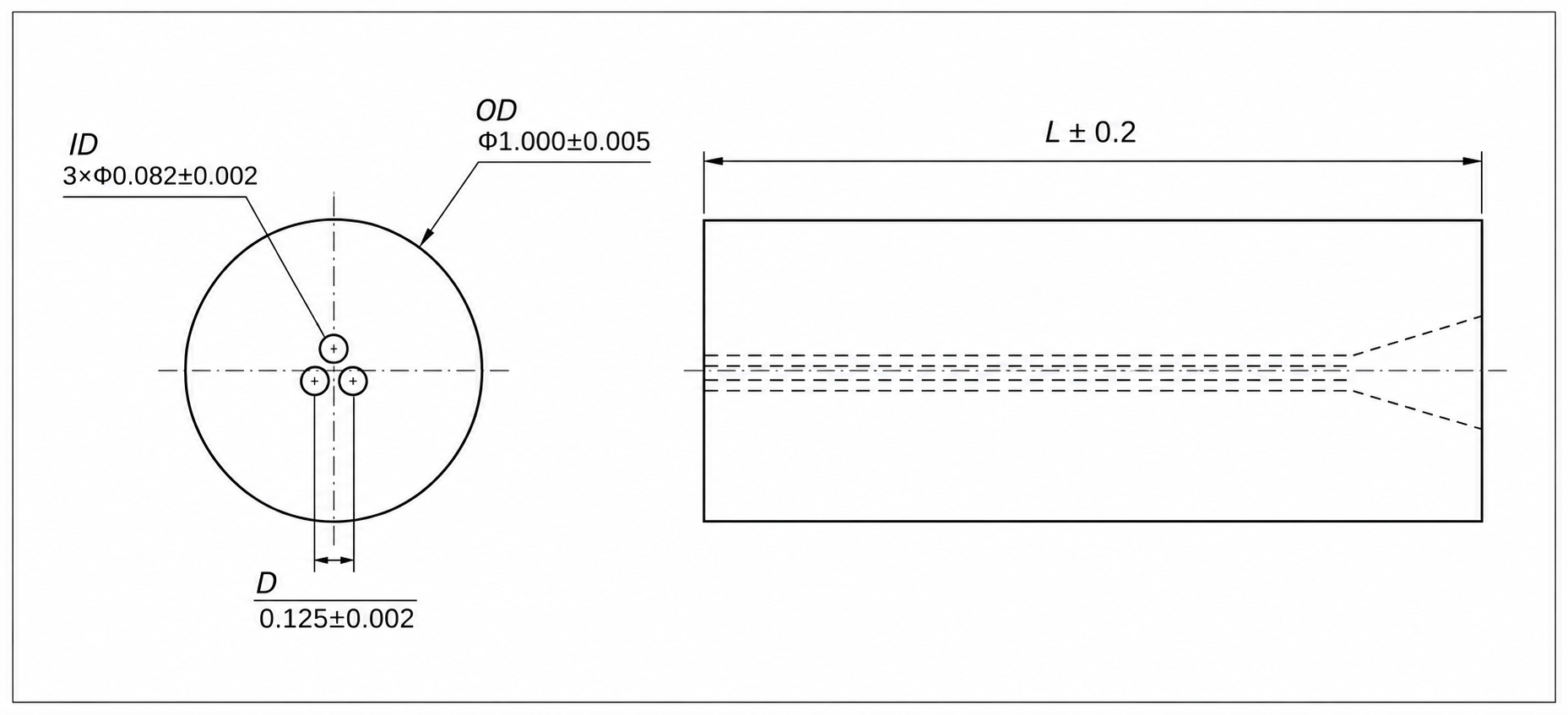
BYNET reference specifications include a nominal outer diameter of 1.0 mm, bore diameter of 0.082 mm, and center-to-center pitch of 0.125 mm.
The final bore arrangement, dimensions, and positional tolerances should be verified against the approved technical drawing.
Key Features
Three Independent Bores
Three separate axial channels provide individual passages for optical fibers within a compact glass structure.
Defined Fiber Spacing
Specified bore center-to-center distances provide a geometric reference for positioning multiple fibers during assembly.
Compact Circular Profile
The circular outer profile allows three fiber channels to be integrated into a single component for compatible optical assemblies.
Specified Dimensional Tolerances
Reference dimensions include outer diameter, bore diameter, bore pitch, and length tolerances.
Drawing-Based Customization
Requests for different outer diameters, bore sizes, bore arrangements, lengths, and positional tolerances can be reviewed according to customer drawings.
Technical Specifications
The following dimensions are based on existing BYNET reference specifications.
| Parameter | Reference Specification |
|---|---|
| Product Type | 3-Bore Glass Capillary |
| Outer Profile | Circular |
| Outer Diameter (OD) | Φ1.000 ± 0.005 mm |
| Number of Bores | 3 |
| Bore Diameter (ID) | Φ0.082 ± 0.002 mm |
| Nominal Bore Pitch (P) | 0.125 ± 0.002 mm |
| Bore Arrangement | To be confirmed by drawing |
| Length (L) | Customer-specified |
| Length Tolerance | ±0.2 mm |
Reference specifications are reproduced from existing product information. The bore arrangement, pitch definition, applicable tolerances, material, and end-face requirements must be confirmed against the approved engineering drawing.
Applications
Specialty Fiber Assemblies
Three-bore glass capillaries can be used to support and position three compatible specialty optical fibers within a single assembly.
Multi-Fiber Pigtail Packaging
The independent channels can provide a defined mechanical arrangement for fibers during bonding and pigtail assembly.
Micro-Optical Component Assembly
Selected configurations can serve as fiber-positioning components in custom micro-optical packages requiring three separate fiber channels.
Optical Fiber Sensor Packaging
Three-bore structures may be considered for specialty fiber sensor assemblies requiring controlled relative fiber positions.
Custom Fiber Alignment Fixtures
The bore geometry can be evaluated for application-specific fiber alignment and supporting structures.
Fiber Compatibility and Bore Selection
Selecting the correct three-bore capillary requires consideration of the actual fiber dimensions and assembly method.
Fiber Cladding Diameter
A nominal bore diameter of 0.082 mm may be suitable for certain small-diameter specialty optical fibers. Compatibility must be confirmed using the actual cladding diameter and dimensional tolerances.
This reference bore is not suitable for inserting conventional 125 μm bare fibers.
Fiber Coating
Where the optical fiber coating is larger than the bore diameter, coating removal may be required for the inserted section, subject to the fiber manufacturer’s handling recommendations.
Bore Pitch and Position
Center-to-center pitch determines the relative positions of the channels. For applications requiring controlled fiber geometry, bore arrangement and positional tolerances should be clearly defined.
Assembly Clearance
The required clearance depends on the fiber diameter, adhesive selection, insertion process, and intended positioning accuracy.
Customization and Technical Support
BYNET can review custom three-bore glass capillary requirements based on customer drawings and application details.
For engineering evaluation, please provide:
- Required outer diameter and length
- Bore diameter and dimensional tolerance
- Bore arrangement and center-to-center pitch
- Bore positional tolerances
- Fiber cladding diameter and coating diameter
- Material and end-face requirements
- Technical drawing and estimated order quantity
Manufacturing feasibility and final specifications are subject to engineering confirmation.
Frequently Asked Questions
Q1: What is a 3-bore glass capillary?
A 3-bore glass capillary is a glass tube containing three separate axial channels. It can be used to position and support three optical fibers within a single component.
Q2: What is the difference between a 3-bore and a dual-bore glass capillary?
A 3-bore capillary contains three independent channels, while a dual-bore capillary contains two. The appropriate design depends on the number of fibers and the required geometry.
Q3: Can the 0.082 mm bores accommodate standard 125 μm optical fibers?
No. A nominal bore diameter of 82 μm is smaller than the 125 μm cladding diameter of a conventional bare optical fiber. Smaller-diameter specialty fibers may be evaluated according to their actual dimensions.
Q4: What does bore pitch mean?
Bore pitch refers to the center-to-center distance between specified bores. The relevant distances and geometric arrangement should be defined in the technical drawing.
Q5: Can BYNET provide custom three-bore capillaries?
BYNET can review requests for custom outer diameters, bore diameters, bore spacing, lengths, and other dimensional requirements based on customer drawings.
Request a Quote
Looking for three-bore glass capillary tubes for your fiber optic assembly?
Send BYNET your required outer diameter, bore diameter, pitch, fiber dimensions, length, technical drawing, and estimated quantity.
Our team can review your specifications and discuss suitable options for your application.
Request a Quote | Send Your Drawing